整理/秦珍子 制图/李晗 张鲁沙(实习生)
国以义为利
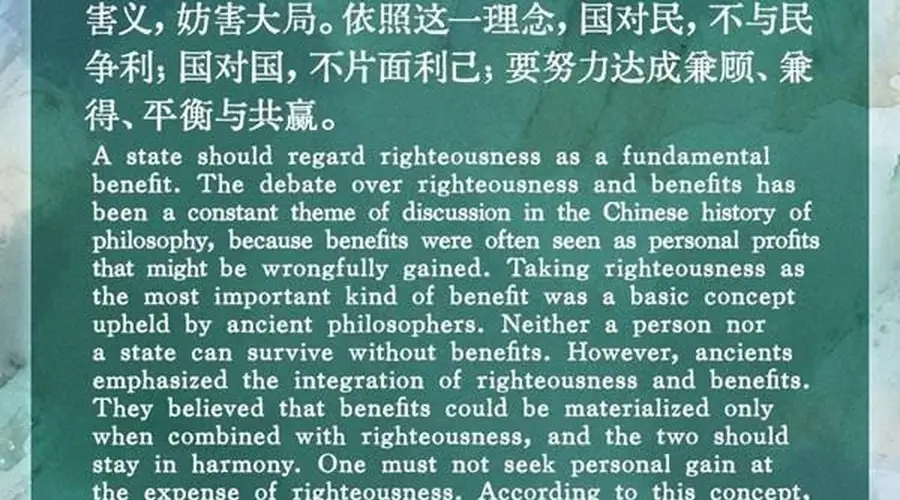
把道义视作根本利益,这是国家立足的基石。“义”与“利”如何权衡,始终是中国思想史中反复探讨的老话题。先贤们确立了一条基本准则:以义取利。从个人修身到国家治理,都离不开利益的支撑。但古人更看重利与义的融合,认为真正的利应当符合道的规范,追求两者的和谐共生,绝不能为了逐利而损害大义,进而破坏整体格局。基于这种观念,国家对百姓,不与其争夺微利;国与国之间,也不应只顾自身私利。各方需致力实现兼顾、兼得、平衡以及共赢的局面。
A State Should Regard Righteousness as a Benefit
A state should regard righteousness as a fundamental benefit. The debate over righteousness and benefits has been a constant theme of discussion in the Chinese history of philosophy, because benefits were often seen as personal profits that might be wrongfully gained. Taking righteousness as the most important kind of benefit was a basic concept upheld by ancient philosophers. Neither a person nor a state can survive without benefits. However, ancients emphasized the integration of righteousness and benefits. They believed that benefits could be materialized only when combined with righteousness, and the two should stay in harmony. One must not seek personal gain at the expense of righteousness. According to this concept, a government must not vie with commoners for benefits, nor should a state vie with another state for benefits for itself only. One must always strive for mutual assistance, shared interests, balance, and win-win outcomes.
引例
利者,义之和也。(《周易·文言》)(真正的利益是义与利的和谐统一。)
Benefit is a combination of righteousness and interests. (The Book of Changes)
秦珍子 李晗 张鲁沙(实习生)来源:中国青年报


