整理/秦珍子 制图/李晗 张鲁沙(实习生)
赏信罚必
所谓赏信罚必,意指该给的奖赏绝不吝啬,该受的惩处也绝不含糊。这一说法常用来形容管理手段严谨、公正且界限清晰,与“赏罚严明”或“赏罚分明”意涵相近。在古人的政治智慧中,奖惩被视为治理国家、统率军队的一把钥匙。它具备鲜明的示范效应:行赏是为了激励向善,动罚则是为了遏制恶念。因此,必须严格遵循既定规矩,厘清功过是非,摒弃私心偏袒,确保奖惩尺度精准得当。唯有如此,方能凝聚起强大的整体合力。这不仅是制度的执行,更是诚信精神在实务中的具体投射。
Confer Honors and Mete Out Punishment to Those Who Deserve Them
This term originally means awarding those who deserve it, and punishing those who must be punished. Later on, it was used to mean that one must be strict, fair, and transparent in governance. Ancient Chinese believed that honors and punishments were important principles and methods in governing a state or an army. These measures can play an exemplary role. The purpose of giving award is to encourage people to do good things, and the purpose of meting out punishment is to bring wrongdoers to justice. Awards and punishments encourage people to follow the rules, and are used to distinguish merit from error and good from bad. When applied properly, awards and punishments avoid favoritism and partiality and urge people to better themselves.
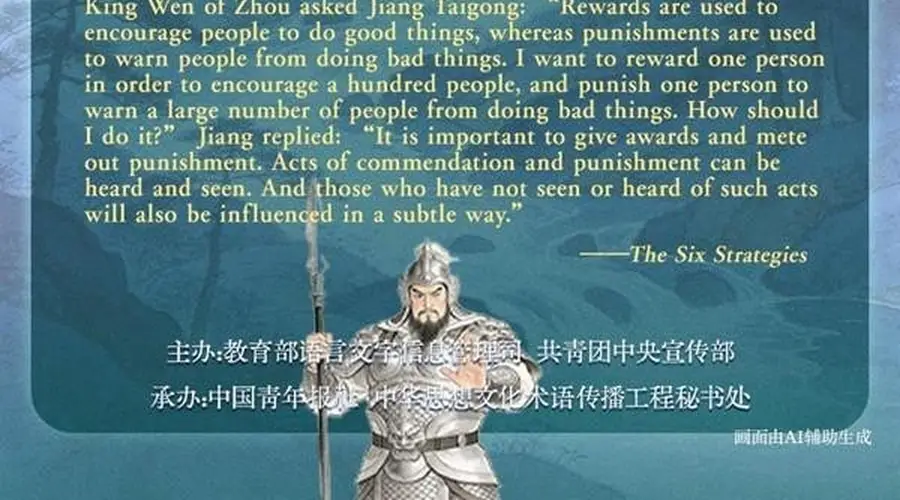
引例文王问太公曰:“赏所以存劝,罚所以示惩。吾欲赏一以劝百,罚一以惩众,为之奈何?”太公曰:“凡用赏者贵信,用罚者贵必。赏信罚必于耳目之所闻见,则所不闻见者莫不阴化矣。”(《六韬·文韬·赏罚》)(周文王问姜太公:“奖赏是用来鼓励人的,惩罚是用来惩戒人的,我想用奖赏一人来鼓励百人,惩罚一人以惩戒众人,应该怎么办呢?”太公回答道:“奖赏贵在守信,惩罚贵在必行。奖赏守信,惩罚必行,是人们耳朵能听到、眼睛能看见的行为。那么,那些没听到和没看见的行为,也因此会跟着潜移默化的。”)
King Wen of Zhou asked Jiang Taigong: "Rewards are used to encourage people to do good things, whereas punishments are used to warn people from doing bad things. I want to reward one person in order to encourage a hundred people, and punish one person to warn a large number of people from doing bad things. How should I do it?" Jiang replied: "It is important to give awards and mete out punishment. Acts of commendation and punishment can be heard and seen. And those who have not seen or heard of such acts will also be influenced in a subtle way."(The Six Strategies)
来源:中国青年报
2026年07月29日 02版


